A warm World Cup welcome? U.S. immigration policies have chilling effect
Media members tour the locker rooms at Kansas City Stadium ahead of the FIFA World Cup 2026 on June 8 in Kansas City, Mo. Jay Biggerstaff/Getty Images hide caption President Trump's restrictive immigration policies are already impacting this year's 2026 FIFA World Cup . At leas
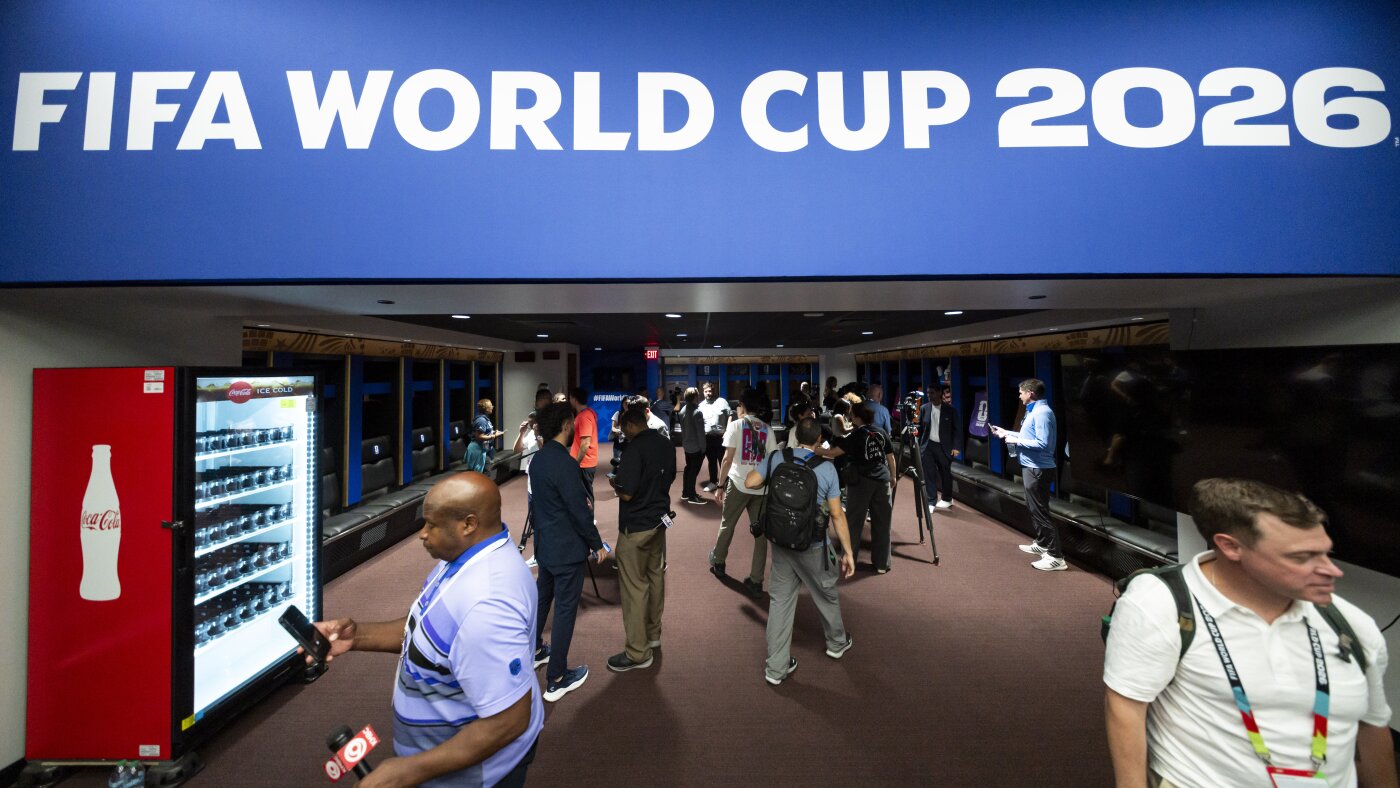
Media members tour the locker rooms at Kansas City Stadium ahead of the FIFA World Cup 2026 on June 8 in Kansas City, Mo. Jay Biggerstaff/Getty Images hide caption
President Trump's restrictive immigration policies are already impacting this year's 2026 FIFA World Cup .
At least one referee from Somalia and one Iraqi team staff member were denied entry at U.S. airports in recent days, and dozens of fans from countries such as Morocco have been denied travel visas, despite being ticket holders.
"I view the 2026 World Cup as a massive paradox," said Jules Boykoff, a professor and the author of Red Card: The 2026 World Cup, Sportswashing and the FIFA Greed Machine. "On one hand, it has more teams than ever participating. On the other hand, because of the policies of the Trump administration, it looks more like a World Cup of exclusion than inclusion."
Boykoff, who is also a former professional soccer player, told NPR he worries the restrictive immigration policies also will shape the experience of fans in the U.S., who might be anxious about potential tense interactions with immigration agents outside of stadiums.
Boykoff's concerns echo those of other policy experts and soccer fans who for months have warned about the influence of President Trump's immigration policies on the tournament.
The White House did not respond to NPR's request for comment.
In a statement to NPR, Customs and Border Protection said "all travelers seeking entry into the United States, including athletes, coaches, and staff, are subject to CBP inspection and vetting."






