NASA reveals high-res image of Omega Centauri star cluster
NASA’s Astronomy Picture of the Day showcased a high-resolution image of the globular star cluster Omega Centauri, revealing its dense core and supporting theories that it may be the remnant of a dwa…
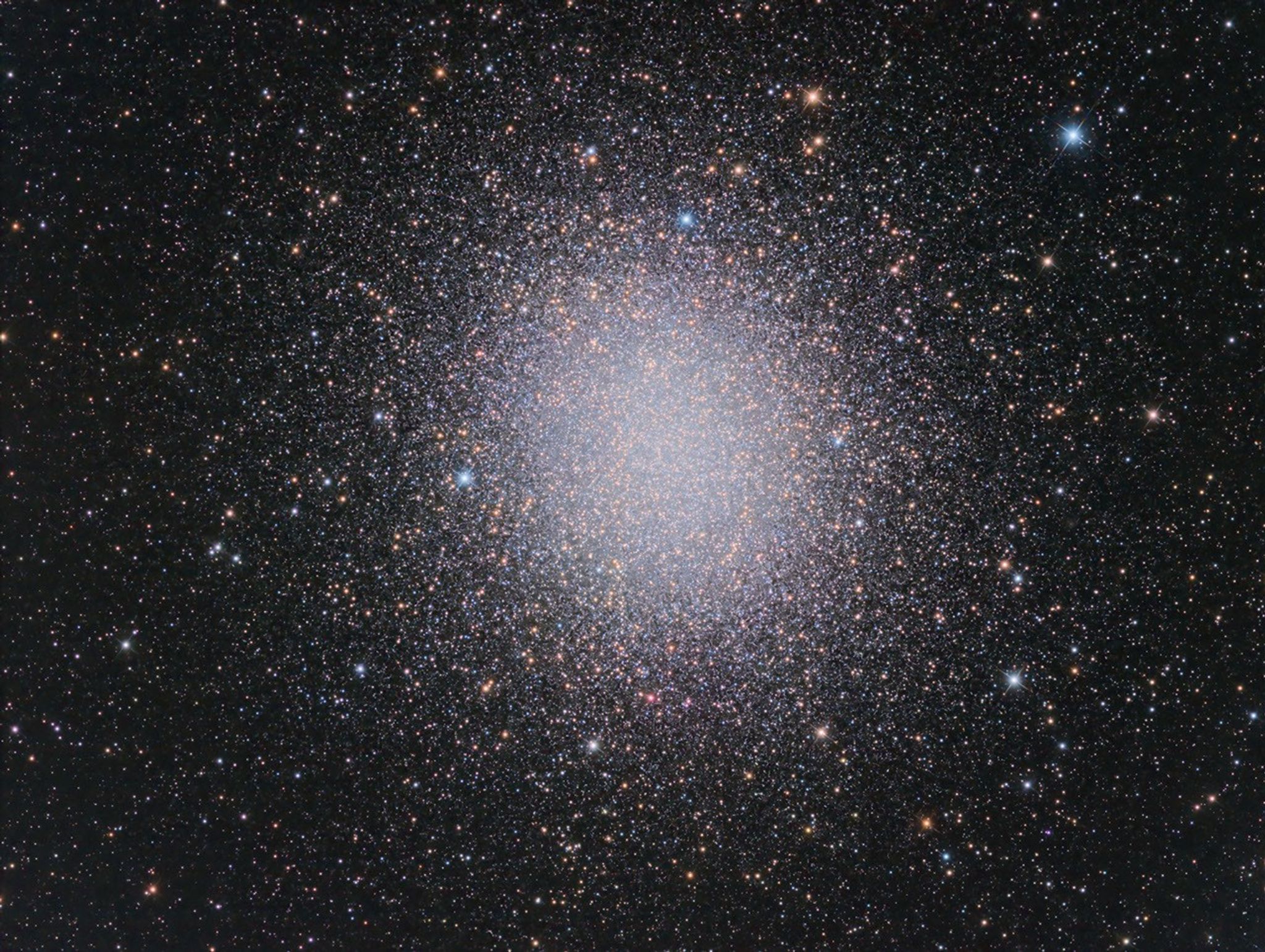
NASA’s Astronomy Picture of the Day featured a new high‑resolution view of the globular star cluster Omega Centauri on September 25, 2026, and the image was posted on the agency’s APOD website with a brief description written by a professional astronomer. The picture was assembled from observations taken by the Hubble Space Telescope’s Advanced Camera for Surveys earlier this year, and it shows the dense core of the cluster in unprecedented detail.
Omega Centauri is the Milky Way’s most massive globular cluster, containing roughly ten million stars packed into a region only about 150 light‑years across. Astronomers have long debated whether it is a true star cluster or the remnant core of a dwarf galaxy that was torn apart by the Milky Way’s gravity. The new image highlights a faint halo of stars that stretch far beyond the bright central region, supporting the theory that the cluster may have once been a small galaxy. The picture also reveals multiple stellar populations with different ages and chemical compositions, offering clues about how the cluster formed and evolved. APOD’s daily feature helps bring such discoveries to a broad audience, and the striking visual has already been shared widely on social media, sparking renewed public interest in stellar archaeology.
The release of the Omega Centauri image comes as the European Space Agency’s Gaia mission is preparing its next data release, which will map the motions of millions of stars in the cluster with unprecedented precision. Astronomers plan to combine the Hubble image with Gaia’s astrometric data and upcoming James Webb spectroscopic observations to probe the cluster’s dark‑matter content and test theories of galaxy formation. In the meantime, teachers and planetarium presenters are using the APOD picture to illustrate concepts of star formation, gravitational dynamics, and the history of the Milky Way. The image underscores how a single, well‑timed snapshot can open new avenues of research while inspiring the next generation of space enthusiasts.
Read Full Story at NASA →