Could humanoid robots be heading for the battlefield?
I've come to an industrial space in a tech-heavy area of San Francisco expecting to see a menacing humanoid robot solider doing something combat-like: the future of land-based warfare, perhaps. Instead, the black shiny faceless Phantom robot is engaged in "free play", manipulati
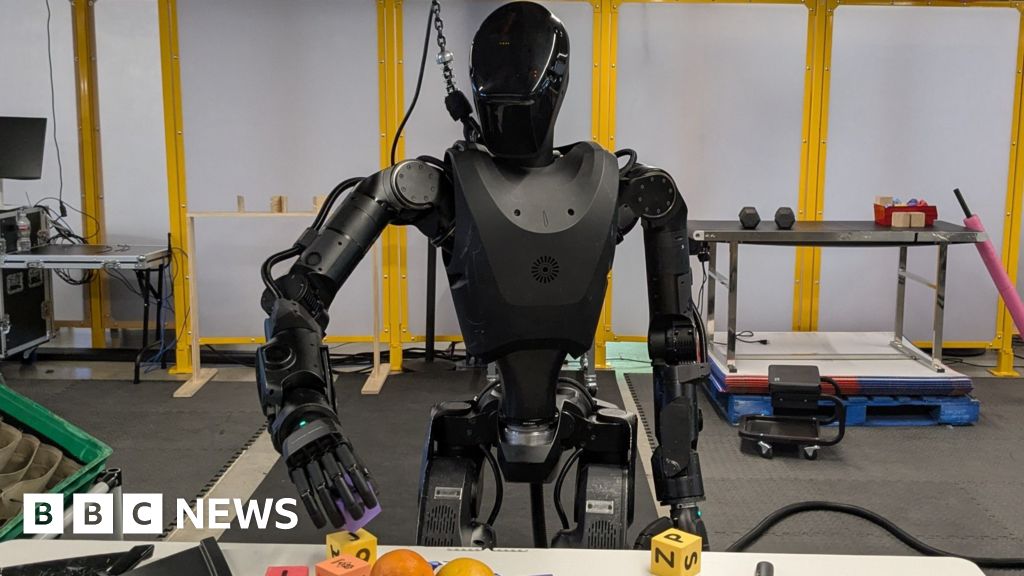
I've come to an industrial space in a tech-heavy area of San Francisco expecting to see a menacing humanoid robot solider doing something combat-like: the future of land-based warfare, perhaps.
Instead, the black shiny faceless Phantom robot is engaged in "free play", manipulating a bunch of coloured kids blocks.
"We need data from it just interacting with its environment…[and] this is today's menu," explains Sankaet Pathak, co-founder and CEO of two-year-old start-up Foundation Robotics, which is developing Phantom for military and civilian applications.
Later he pushes its 80kg steel-covered body around the room to demonstrate its stability and shows me how it walks.
While many companies are building autonomous humanoid robots for factories, homes or companions, Foundation claims it is the only US firm developing them specifically for a broad range of defence applications.
That includes support roles like supply pickup, reconnaissance, recovery of equipment or casualties, and hazard inspection. But also, more controversially, warfighting to engage and neutralise threats – which Pathak calls "frontline weaponisation".
Arming robots could keep human soldiers out of harm's way, he argues. They could enter and search buildings, where chokepoints can be lethal.
They could also reduce collateral damage. Land-based autonomy can be more precise than striking targets autonomously from the air, he says.