Ecuador accused of meddling in Colombian election with tariff vow
Ecuador's President Daniel Noboa was accused by Colombia of interfering in its presidential election after pledging to lift tariffs on Colombian goods for right-wing candidate Abelardo de la Espriella. Colombia's government called Noboa's actions a violation of non-intervention principles, amid heightened tensions over the upcoming election.
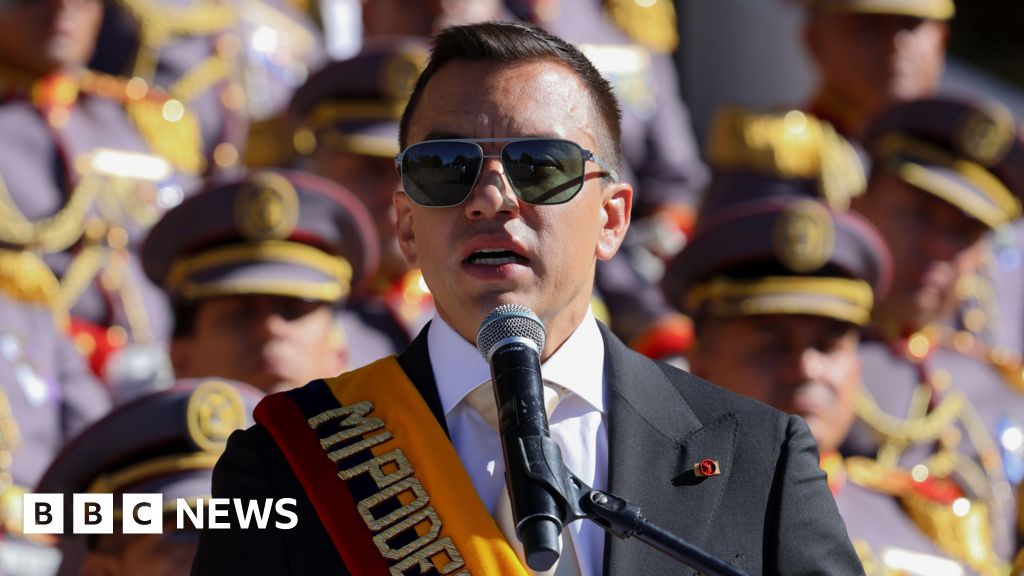
Ecuador’s President Daniel Noboa has been accused by Colombia’s foreign ministry of “deliberate interference” in its presidential election after he publicly pledged to lift tariffs on Colombian goods in a meeting with a right-wing candidate. The accusation follows a Friday conversation between Noboa and presidential hopeful Abelardo de la Espriella, during which the Ecuadorian leader claimed the two had “reached an agreement” on trade and security measures. Colombia goes to the polls on Sunday in a tightly contested election that could reshape the country’s political alliances and determine its approach to escalating drug-related violence.
The tariff dispute has deepened tensions between the two nations. Ecuador imposed restrictions on Colombian imports in January, citing concerns over Bogotá’s failure to secure their shared border. Noboa has framed the decision to lift tariffs—a move he said would take effect on 1 June—as a gesture of cooperation with an incoming administration led by de la Espriella. He also announced an agreement to facilitate the handover of Ecuadorian criminals located in Colombia, positioning the dialogue as a pre-emptive partnership ahead of the vote. However, Colombia’s government rejected this framing outright. In a statement on Saturday, the foreign ministry condemned what it called “the misleading presentation of the decision to repeal the tariffs as a goodwill measure,” asserting that Noboa’s actions constituted a flagrant violation of the principle of non-intervention in another state’s affairs.
The timing of the dispute has heightened concerns about foreign influence in Colombia’s democratic process. Political polarisation has reached unprecedented levels in the lead-up to the election, with candidates representing sharply divergent visions for the country’s future. Left-wing frontrunner Iván Cepeda, backed by outgoing President Gustavo Petro, has pledged to continue the current administration’s “total peace” policy, which seeks negotiated settlements with armed groups involved in drug trafficking. Polling suggests Cepeda holds a narrow lead over de la Espriella, a staunch conservative who has advocated for a harder line on security and closer ties with the United States. A run-off vote is scheduled for 21 June if no candidate secures an outright majority on Sunday.
Beyond the immediate electoral implications, the episode underscores the broader geopolitical realignment under way in Latin America. Petro’s government has frequently clashed with Washington over issues such as drug policy and regional intervention, while Noboa has aligned closely with US-led efforts to combat cartels. Ecuador’s strategic location—sandwiched between Colombia and Peru, the world’s top cocaine producers—has made it a critical transit hub for illicit drugs, amplifying the stakes of Colombia’s election for regional stability. As voters prepare to cast their ballots, the accusation of foreign meddling has added another layer of uncertainty to an already fraught political contest.