EU unblocks €16 billion in Hungary assistance as Magyar promises reforms
EU approved €16.4 billion in frozen funds for Hungary after PM Péter Magyar pledged economic and governance reforms, including €10B from Next Generation EU and €4.2B in cohesion funds. Funds aim to boost Hungary's stagnant economy, reduce budget deficit, and address high interest rates.
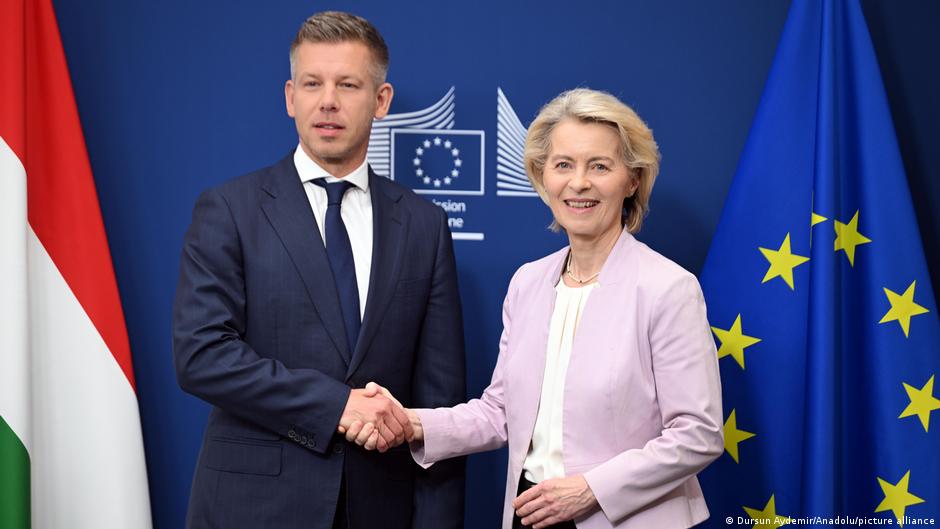
The European Commission has announced the release of €16.4 billion in frozen EU funds for Hungary, following commitments from the country’s new government to implement a series of economic and governance reforms. Speaking in Brussels alongside Hungarian Prime Minister Péter Magyar, Commission President Ursula von der Leyen confirmed that the bloc would unfreeze €10 billion from the Next Generation EU recovery fund, €4.2 billion in cohesion funds, and a further €2.2 billion upon completion of agreed reforms. The decision marks a significant shift in relations between Budapest and Brussels, which had deteriorated under the previous administration of Viktor Orbán, amid disputes over rule-of-law concerns, fiscal policies, and Hungary’s stance on supporting Ukraine following Russia’s full-scale invasion.
Prime Minister Magyar, who took office last month after defeating Orbán in national elections, described the agreement as a “historic breakthrough,” emphasising that it would enable Hungary to rebuild its stagnant economy and restore public services. “We will bring this money home, as we promised, to jump-start the economy, to restore and develop public services, and to strengthen the competitiveness of Hungarian companies and small and medium-sized enterprises,” he told reporters. The funds are expected to address longstanding economic challenges, including a sluggish growth trajectory, a widening budget deficit—projected at 6.2% of GDP this year—and elevated central bank interest rates of 6.25%, far exceeding those set by the European Central Bank.
Von der Leyen acknowledged the scale of the assistance but stressed that Hungarian citizens stood to benefit directly from the restored funding. “That is quite a sum, but... the Hungarian people deserve it. Again, many, many thanks for the outstanding work that has been done,” she said during the joint press conference. The move follows months of negotiations and reflects Brussels’ willingness to reward tangible reform efforts while maintaining pressure on governance standards. The forint, Hungary’s national currency, has already shown signs of strengthening in anticipation of the funding release, signalling renewed investor confidence.
With the economy having grown by minimal margins over the past three years despite substantial pre-election spending, the unblocking of EU funds offers a potential lifeline for recovery. However, the agreement is contingent on Hungary’s continued implementation of the agreed reforms, underscoring the EU’s cautious approach to ensuring accountability. The development signals a new chapter in EU-Hungary relations, one focused on economic recovery rather than political contention.