Ferrari wanted to take on Chinese EVs with the Luce - then the backlash started
Ferrari’s first EV, the **$640,000 Luce**—designed with Jony Ive—sparked an 8% stock drop and backlash over its **Nissan Leaf-like styling**, with critics like ex-chairman **Luca di Montezemolo** and Italy’s deputy PM calling it a threat to the brand’s legacy. The controversy highlights Ferrari’s struggle to compete with **Chinese EVs** while preserving its **combustion-engine identity**.
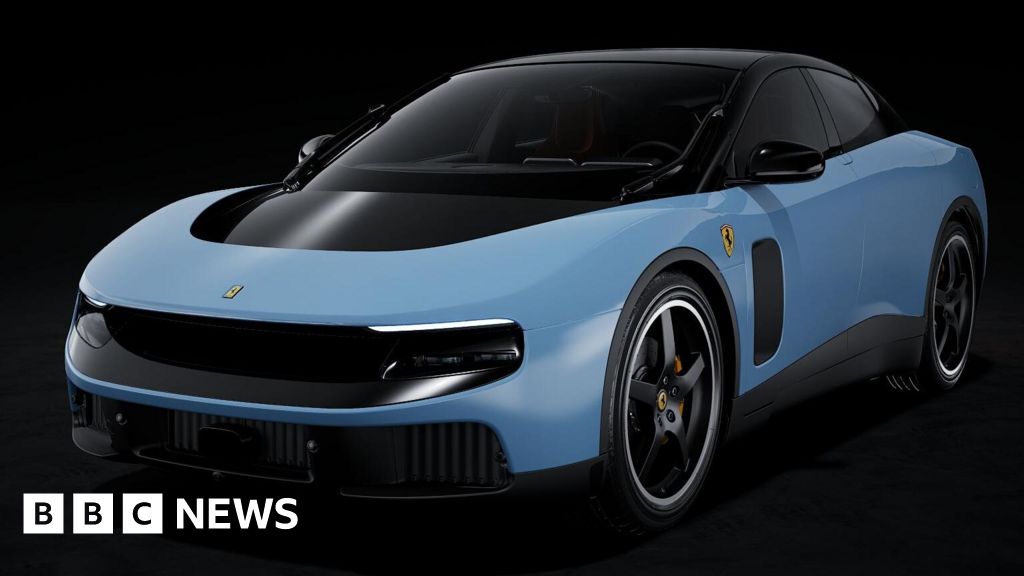
Ferrari’s bold foray into the electric vehicle market with its first fully battery-powered car, the Luce, has triggered an unprecedented backlash from investors, purists, and even government officials, raising questions about whether the iconic Italian marque can successfully pivot away from its combustion-engine heritage. Designed in collaboration with Apple’s former chief designer Sir Jony Ive, the $640,000 (£475,625) five-seater was unveiled with fanfare—attended by Italian President Sergio Mattarella and Pope Francis—but its reception has been anything but reverent. Within a day of its debut, Ferrari’s share price plummeted by 8%, while social media erupted with memes comparing its controversial styling to budget electric cars like the Nissan Leaf, a stark contrast to the brand’s usual association with sleek, high-performance supercars.
The criticism extends beyond internet mockery, striking at the heart of Ferrari’s identity. Former chairman Luca Cordero di Montezemolo, a stalwart of the brand’s racing legacy, warned that the Luce risks "the destruction of a legend" and suggested Ferrari should dissociate its prancing horse emblem from the model. Italy’s deputy prime minister, Matteo Salvini, echoed the sentiment, questioning whether the car’s design—lacking the low-slung silhouette and thunderous engine note of traditional Ferraris—truly represents innovation. High-end car collector Shaun Baker, who has owned over 50 Ferraris, dismissed the Luce as the "Loser," arguing it undermines the brand’s aspirational allure. Even among supporters who praise its futuristic aesthetics, the consensus remains divided, with some online commentators labeling it an "abomination" and speculating that founder Enzo Ferrari would disapprove.
The Luce’s turbulent reception underscores the broader challenges facing legacy automakers as they confront the rise of Chinese EV manufacturers, who are rapidly gaining ground with competitive pricing and advanced technology. Ferrari, which long resisted electrification, now finds itself in a precarious position: balancing the need to innovate with the risk of alienating its core customer base, which reveres the brand’s racing pedigree and visceral driving experience. The Luce’s performance credentials—accelerating from 0-60mph in 2.5 seconds with a top speed exceeding 190mph—do little to mollify critics who argue that a Ferrari’s soul lies in its internal combustion engine. CEO Benedetto Vigna, who has steered the company toward diversification with models like the Purosangue SUV, defends the Luce as a necessary evolution, though its polarizing design suggests the transition may not be smooth.
Analysts note that Ferrari’s previous gambles, such as the Purosangue, initially faced skepticism but ultimately succeeded commercially, expanding the brand’s market reach. Whether the Luce can follow a similar trajectory remains uncertain, particularly as it enters a segment dominated by agile competitors from China and Tesla. For now, the debate over the car’s design and purpose reflects deeper tensions within the industry: can a brand synonymous with roaring V12s retain its prestige in an era defined by silent, battery-powered propulsion? The answer may determine not just the Luce’s fate, but Ferrari’s ability to remain relevant in a rapidly changing automotive landscape.