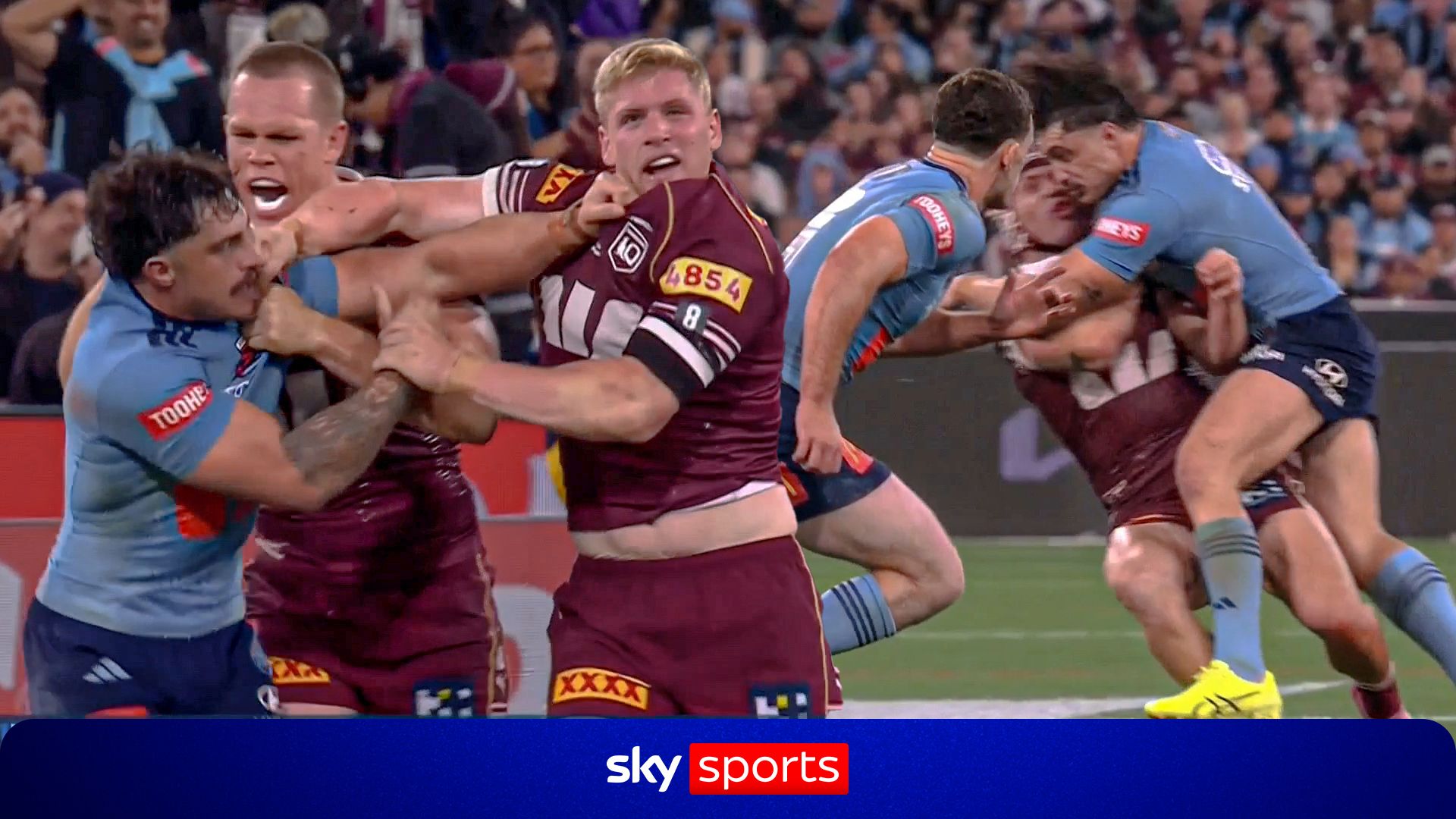
'He's been hammered!' | Tempers flare AGAIN in State of Origin after late hit!
New South Wales' Kotoni Staggs is sin-binned after a late hit on Queensland's Kalyn Ponga in the State of Origin game.
Sky Sports — 17 June 2026
Text:
1
0
0
New South Wales' Kotoni Staggs is sin-binned after a late hit on Queensland's Kalyn Ponga in the State of Origin game. This report comes from Sky Spo
Read Full Story at Sky Sports →
⚡ Quickyla Analysis
Original editorial context — not sourced from the article above
The latest flare-up in State of Origin rugby league underscores the tension that has defined this year’s series, where physicality and frustration have repeatedly boiled over into controversy. The sin-binning of New South Wales’ Kotoni Staggs for a late hit on Queensland’s Kalyn Ponga isn’t just another disciplinary moment—it’s a symptom of a deeper issue. Origin isn’t just a series of games; it’s a cultural battleground where state pride, tactical aggression, and the relentless pressure of high-stakes rugby league collide. When tempers erupt this late in a match, it signals not just individual misjudgment but a systemic tolerance for borderline violence that the league’s governing bodies have struggled to curtail.
This isn’t the first time such incidents have marred the series. Earlier clashes, including high-profile brawls and repeated penalties for late hits, suggest a growing acceptance of physical retaliation as part of the game’s DNA. Yet with each sin-binning or penalty, the question lingers: is the NRL doing enough to enforce discipline without stifling the sport’s intensity? The league’s crackdown on shoulder charges and high tackles in recent years has shifted the focus to more subtle forms of aggression, where players test the boundaries of what’s permissible. Staggs’ dismissal may be framed as an isolated incident, but it’s part of a pattern where the line between hard but fair play and reckless fouls has become increasingly blurred.
What happens next could set the tone for the rest of the series—or at least the league’s approach to managing such incidents. If the NRL responds with stricter penalties, teams may adjust their strategies, opting for more conservative play in high-pressure moments. Alternatively, if the league’s response is seen as inconsistent, frustration could spill over again, risking further reputational damage to a sport that prides itself on its physical and emotional stakes. For fans, the spectacle of Origin is undeniable, but the collateral damage—suspended players, tarnished reputations, and a perception of chaos—is becoming harder to ignore. The real test isn’t just how Staggs’ team copes with his absence, but whether the league can reconcile its brutal ethos with the need for control.
Sources
⚽ Sports
Don’t underestimate young athletes — the NAACP boycott plan could actually work

⚽ Sports
The football fans who went to a World Cup and loved it so much, they stayed
⚽ Sports
Barcelona Is Reportedly Pushing For Roony Bardghji’s Summer Exit

⚽ Sports
Arkansas baseball can't overcome pitching, defensive flaws as 2026 season ends

⚽ Sports
Egypt to hold open training session for 'limited' number of fans in Spokane ahead of World Cup

⚽ Sports
Champions League final: PSG's players and fans 'kept on believing'

