Noether’s theorem underpins modern physics discoveries
Emmy Noether’s theorem proves that every symmetry in nature corresponds to a conserved quantity like energy or momentum, underpinning modern physics. Without her work, key discoveries like the Higgs b
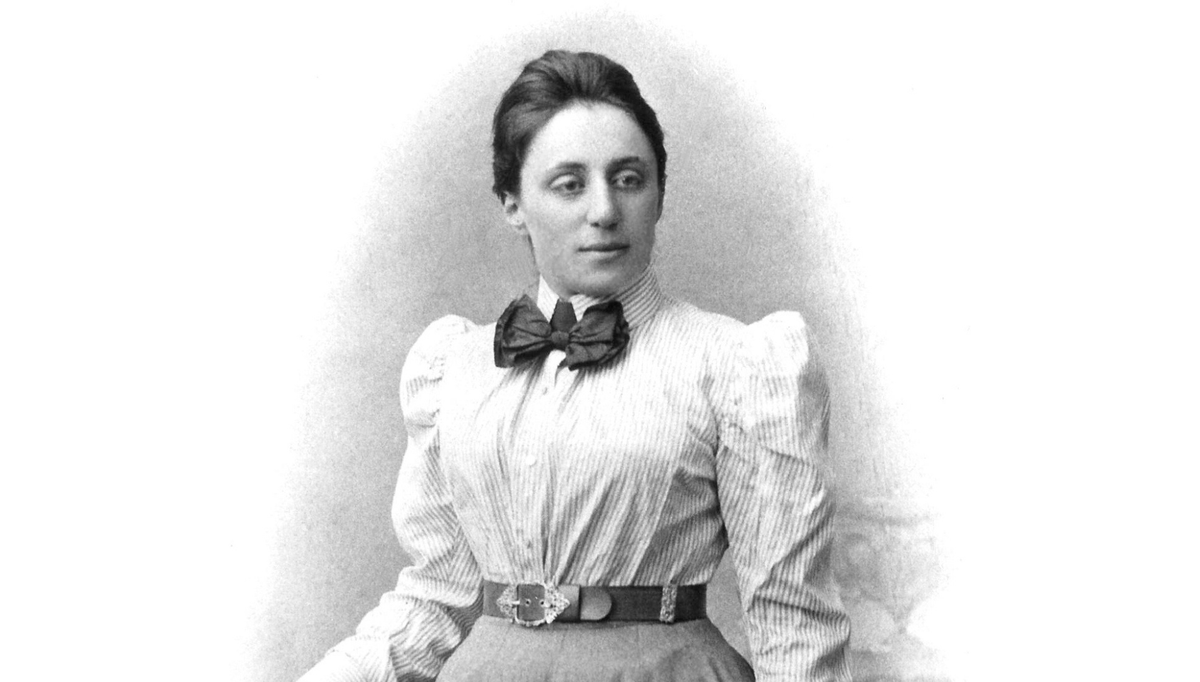
Mathematician Emmy Noether cracked a code in physics that even Einstein called “pure magic.” Her theorem proved that every symmetry in nature—like tim
Read Full Story at Scientific American →Why This Matters
The discovery of Noether's theorem wasn't just a footnote in mathematical history—it was the mathematical scaffolding that allowed Einstein to complete general relativity and particle physicists to construct the Standard Model. By linking symmetry to conservation laws, Noether provided the language through which modern physics could articulate its deepest principles, from the conservation of energy to the behavior of fundamental forces.
Background Context
In early 20th-century Göttingen, a bastion of mathematical thought, Noether faced not only the challenges of groundbreaking research but also the systemic barriers of gender discrimination—she lectured under Hilbert’s name for years before earning a formal position. Her exile from Germany under Nazi racial laws in 1933 was not just a personal tragedy but a loss of intellectual capital that reshaped American academia, particularly at Bryn Mawr and the Institute for Advanced Study.
What Happens Next
As theoretical physics probes the edges of quantum gravity and dark matter, Noether’s framework remains a critical tool for testing new symmetries—like supersymmetry or conformal invariance—though some argue its classical form may need expansion to accommodate spacetime’s quantum fluctuations. Meanwhile, historians and educators are increasingly revisiting her legacy to challenge the gendered narratives of scientific progress and inspire diverse voices in STEM.
Bigger Picture
Noether’s story reflects a recurring pattern in science: marginalized innovators whose work becomes foundational only in hindsight, highlighting how institutional biases can obscure transformative ideas. Her theorem also exemplifies the universal language of mathematics in physics—a reminder that even in an era dominated by data and computation, abstract reasoning remains indispensable to discovery.







