Japan switches on its first full-stack room-temperature quantum computer — and scientists plan to scale it up to 10,000 qubits
Researchers in Japan have switched on "Shunkai," a neutral atom quantum computer that scientists hope to scale into a 10,000-qubit behemoth by March 2031. Shunkai is the first full-stack system of i…
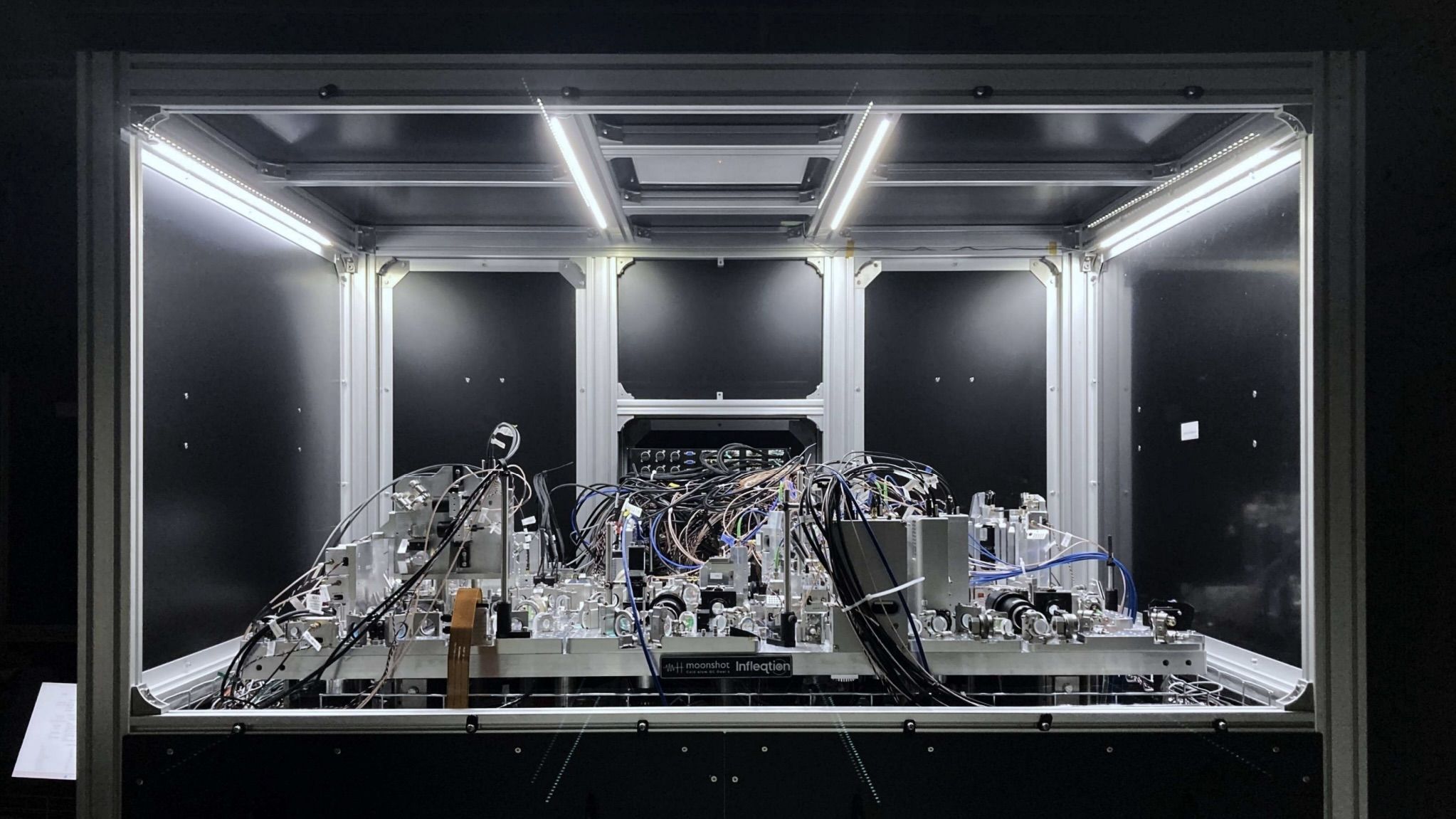
Researchers in Japan have switched on "Shunkai," a neutral atom quantum computer that scientists hope to scale into a 10,000-qubit behemoth by March 2031.
Shunkai is the first full-stack system of its kind in Japan, meaning it features the software, control and hardware layers needed to read user inputs and return a result — not unlike a conventional PC. In theory, that means it should be easier for researchers to get some meaningful use out of the machine, with the team behind Shunkai planning to open it up to external users over the coming years.
In a statement , project lead Kenji Ohmori , a professor of photo-molecular science at the Institute for Molecular Science, said researchers' use of Shunkai would "lead to ripple effects on various fields in industry, academia, and government around the world."
The team behind the new machine plans to integrate it into an existing shared supercomputing facility to create a quantum-GPU hybrid computing center.
Unlike traditional, or "classical," computers, quantum computers operate according to the strange laws of quantum physics . In quantum systems, qubits — in the form of superconducting circuits, trapped ions or photons (among other modalities) — represent the fundamental building blocks of quantum information. These can exist as a 1, 0, or a " superposition " of both states at once.
However, qubits are notoriously fragile . Even minor environmental interference can destabilize or destroy the information they contain, making accuracy an ongoing challenge in the world of quantum computing. The error rate in qubits is thought to be roughly 1 in 1,000, compared with around 1 per billion or even 1 per trillion operations in classical computing bits.
It's why a huge amount of research is dedicated to quantum error correction . This field seeks to alleviate this inherent unreliability by building redundancies into the way information is encoded in qubits so that small errors don't scrap entire computations.
Get the world’s most fascinating discoveries delivered straight to your inbox.
Read Full Story at Live Science →