Reporting Catholic news to the secular world – the side hustle in Catholic media
Pope Francis's major statements often influence global discourse, but secular media struggles to contextualize their theological and institutional significance. Catholic outlets like *Crux* and *The Tablet* bridge this gap, providing accurate, clear reporting on faith-related issues amid misinformation and declining religious literacy in mainstream journalism.
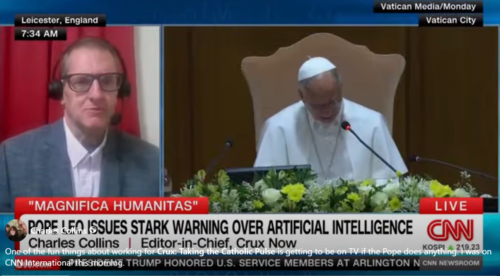
When Pope Francis delivers a major address or issues a significant doctrinal statement, the ripple effects extend far beyond the Catholic faithful, often shaping global discourse on issues like migration, climate change, or social justice. Yet translating the theological and institutional nuances of such pronouncements into accessible, engaging news for secular audiences remains a persistent challenge, particularly as mainstream media outlets increasingly lack reporters with deep religious literacy. This disconnect underscores the growing but often overlooked role of Catholic media outlets, which serve not only as pastoral resources for believers but also as crucial intermediaries bridging the gap between faith-inspired discourse and public understanding.
The issue gained renewed attention following Francis’s 2023 apostolic exhortation *Laudate Deum*, an update to his landmark climate encyclical *Laudato Si’*, which drew international coverage for its urgent call to action on environmental degradation. While secular outlets broadly reported on the pope’s warnings about climate change, many struggled to contextualise the theological foundations of his arguments or the institutional weight behind them—gaps that Catholic newsrooms like *Crux* and *The Tablet* are uniquely positioned to fill. These organisations operate in a delicate balance: maintaining fidelity to Catholic teaching while adhering to journalistic standards that prioritise clarity, accuracy, and public interest. Their work is increasingly vital in an era where misinformation about religion spreads as quickly as verified reporting, particularly on contentious issues like gender, sexuality, and bioethics.
The secular media’s lack of religious expertise is not a new phenomenon, but its consequences have grown more pronounced as geopolitical conflicts—from the persecution of Christians in the Middle East to debates over religious freedom in Western democracies—elevate faith-related stories to the front pages. A 2022 Pew Research Center study found that fewer than one in five journalists in the United States identify as highly religious, leaving many ill-equipped to interpret the significance of events like the Vatican’s diplomatic interventions in Ukraine or the global synodal process Francis has championed. Catholic media, by contrast, often employs reporters with theological training, granting them the ability to dissect complex issues such as the Vatican’s evolving stance on artificial intelligence or its shifting approach to relations with China.
Yet the rise of Catholic journalism as a corrective to secular blind spots also raises questions about objectivity and audience trust. Critics argue that faith-based outlets risk blurring the line between reporting and advocacy, particularly on polarising topics like abortion or LGBTQ+ rights. However, proponents counter that transparent editorial standards and a commitment to factual accuracy can—and do—coexist with a mission to illuminate how religious beliefs shape global affairs. As the world becomes more interconnected and religious identity remains a potent force in politics and culture, the role of Catholic media as a translator of faith for the secular public is likely to grow, challenging both journalists and their audiences to engage more deeply with the ideas that continue to mould history.