Retail giants join UK government drive to boost ‘plug-in’ balcony solar panels
Lidl, Asda, Amazon and B&Q among chains in talks to sell devices that feed into household sockets and can cut electricity bills by 30% Spanish homes save €10 a month via renewables expansion Bosses of some of Britain’s biggest retailers are discussing plans with the government
Lidl, Asda, Amazon and B&Q among chains in talks to sell devices that feed into household sockets and can cut electricity bills by 30%
Bosses of some of Britain’s biggest retailers are discussing plans with the government to start selling plug-in solar panels as part of a drive to encourage more UK homes to generate their own electricity.
Executives from brands including Currys, B&Q, Amazon and Lidl met Martin McCluskey, the minister for energy consumers, on Tuesday to discuss guidelines for selling “balcony solar panels” to the British public.
Asda, Screwfix and Wickes also attended the meeting to discuss how to help people living in flats or rented homes without rooftop access to benefit from the government’s solar power strategy and cut their energy bills.
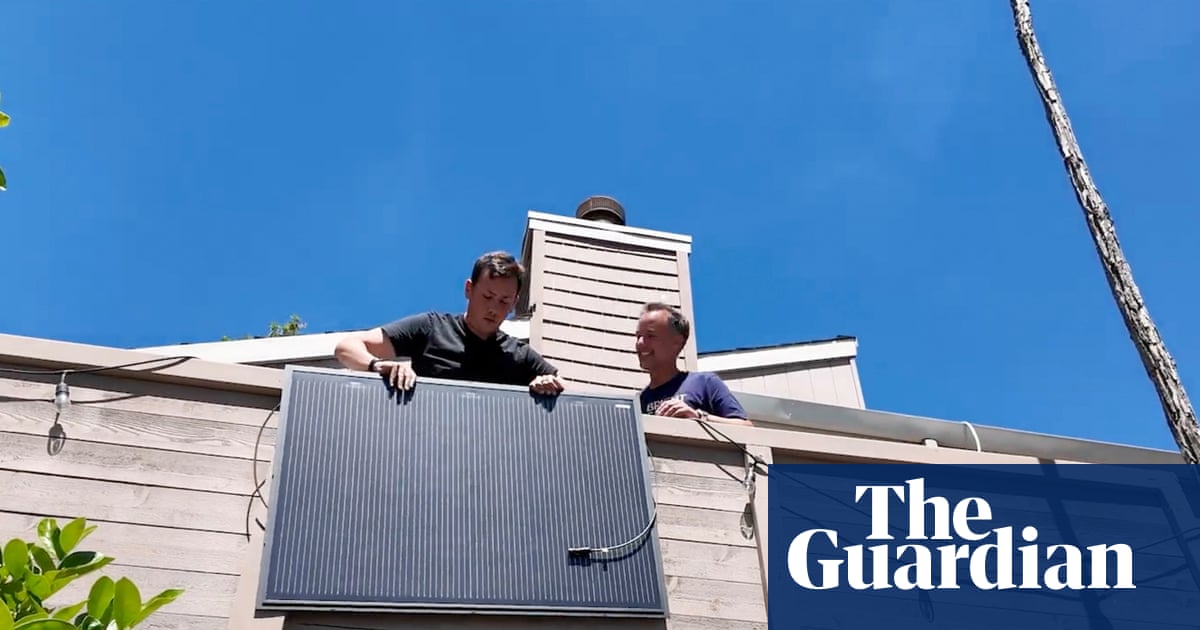
Plug-in solar panels can be placed on a balcony, terrace, shed roof or any other outdoor space to generate electricity that flows directly into the electrical circuit of a house when plugged in through a standard three-prong plug. When an appliance is turned on it uses the solar power first.
This means households can run their electrical appliances without needing to buy as much power from the grid. Plug-in systems usually have a capacity of 800 watts, or one-fifth of the size of a typical residential rooftop solar system, so while they would be unable to power a house alone they could help to reduce bills.
Typically, a household could save up to £70-110 a year from installing plug-in solar, according to government research. The cost of plug-in systems are expected to start at about £400, meaning it would take between four to seven years to cover the initial outlay.
The government first set out plans to help households join the millions of people across Europe who generate their own electricity with “plug-in” panels in proposals last summer . It expects the devices to be available in stores in the coming months.