🔬 Science
Live
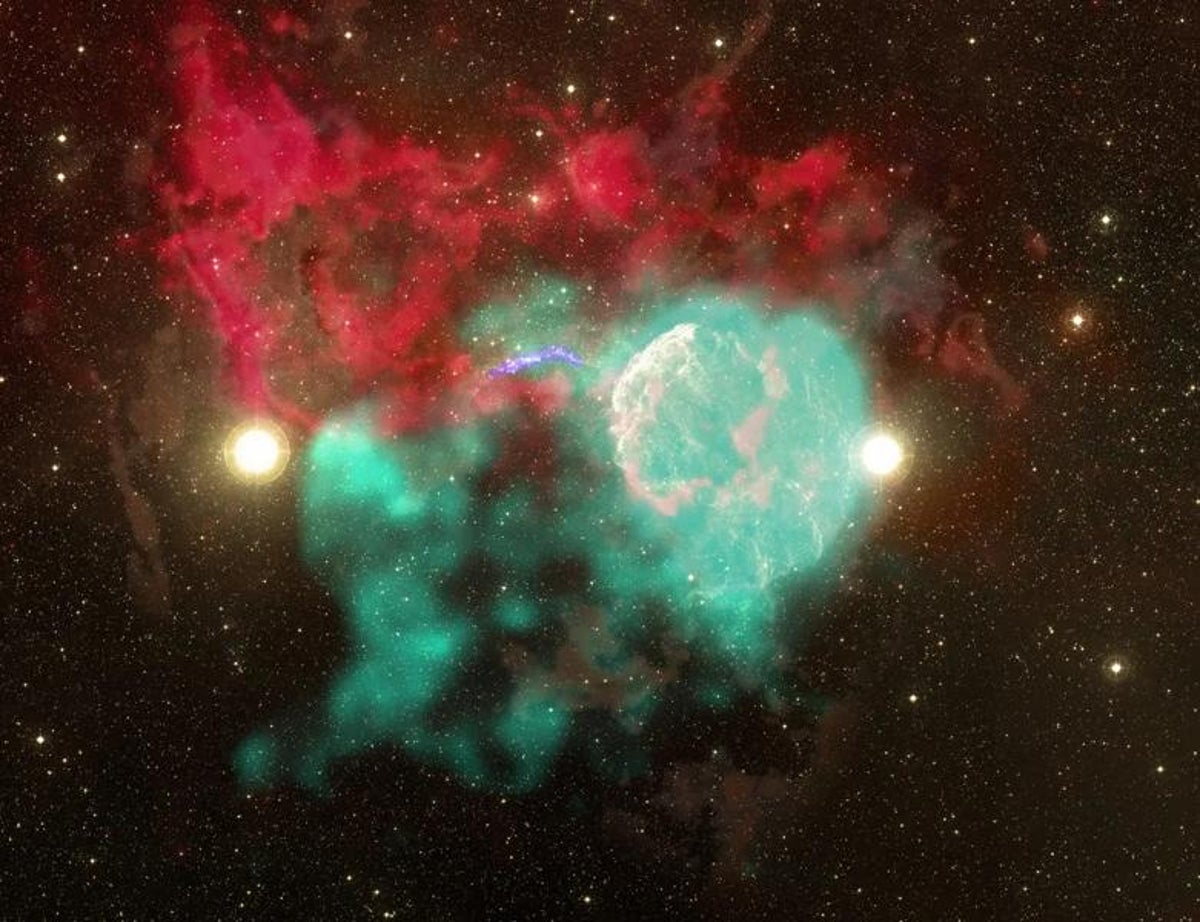
Scientists discover remnants of Jellyfish Nebula’s ‘sibling’ supernova
Scientists discover remnants of Jellyfish Nebula’s ‘sibling’ supernova Astronomers may have found the remains of two long-dead stellar siblings By Sam Macdonald edited by Claire Cameron Millions of
Scientific American — 19 June 2026
Text:
14
0
0
Scientists discover remnants of Jellyfish Nebula’s ‘sibling’ supernova Astronomers may have found the remains of two long-dead stellar siblings Mill
Read Full Story at Scientific American →
⚡ Quickyla Analysis
Original editorial context — not sourced from the article above
The discovery of what may be the "sibling" remnants of the Jellyfish Nebula’s supernova isn’t just another astronomical curiosity—it’s a rare glimpse into the violent, interconnected history of massive stars. Supernovae are often studied as isolated events, but this finding suggests these cosmic explosions may have shared origins, hinting at binary star systems where one star’s death triggered or influenced another. Such discoveries challenge our understanding of stellar evolution, particularly for massive stars that end their lives in spectacular supernovae rather than quietly fading into white dwarfs. The Jellyfish Nebula itself, a well-studied supernova remnant, is now revealing its backstory, implying that its explosion may not have been a solitary act but part of a broader stellar drama.
Historically, astronomers have focused on single-star supernovae, but evidence for binary systems has grown in recent decades. The Jellyfish Nebula’s potential sibling remnant suggests that at least some supernovae occur in pairs or clusters, with the death of one star possibly destabilizing its companion. This could explain unusual features in the nebula’s structure, such as asymmetrical shockwaves or irregular distributions of heavy elements. If confirmed, this discovery would reinforce the idea that many supernovae are not lone events but part of a dynamic, interconnected stellar ecosystem.
What remains unclear is how common such sibling supernovae are. Are they rare anomalies, or an overlooked feature of stellar death? Future observations with next-generation telescopes like the Vera C. Rubin Observatory or the James Webb Space Telescope could scan the skies for similar remnants, revealing whether this is an isolated case or part of a larger pattern. The finding also raises questions about how these events influence their surroundings—do multiple supernovae in close succession trigger new waves of star formation, or do they sterilize their environments, leaving behind only the ghosts of their predecessors?
Beyond the technical details, this discovery underscores the ever-evolving nature of astrophysics. Every new remnant we uncover peels back another layer of the universe’s violent past, forcing scientists to rewrite the narratives of stellar life and death. It’s a reminder that even in the vastness of space, nothing happens in isolation.
Sources

🔬 Science
'Astonishing': James Webb telescope spots the most chemically primitive galaxy in the ancient universe

🔬 Science
El Niño Is Underway

🔬 Science
Astronomers gaze into the 'Crystal Ball Nebula' and see a vision of our dying sun — Space photo of the week

🔬 Science
Bacteria uncover distinct strategy to import rare sugar polymers, crystal structures show

🔬 Science
NASA Awards Contract for Johnson Space Center Infrastructure

🔬 Science
Repairing DNA damage: Scientists discover a surprising new benefit of melatonin

