Spain’s ‘post-secular’ cultural moment may offer opportunity for Leo XIV
Pope Leo XIV's June visit to Spain follows a decline in Catholic church attendance, from 30% in the 1980s to under 10% today, amid rising secularization. The visit occurs as Spain embraces post-secular spirituality, with the Pope aiming to re-engage a society open to moral discussions beyond rigid doctrines.
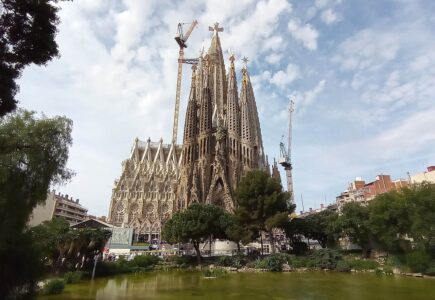
Pope Leo XIV is set to visit Spain in early June, marking a pivotal moment in the country’s evolving religious and cultural landscape. Once a stronghold of Catholicism, Spain has undergone profound secularization in recent decades, with church attendance plummeting and public attitudes increasingly shaped by post-secular values. This shift presents both challenges and opportunities for the Catholic Church, as it seeks to reconnect with a society that retains deep cultural ties to its Christian heritage but is increasingly indifferent—or even resistant—to institutional religion. The pope’s visit comes at a time when Spain, like much of Western Europe, is grappling with the legacy of secularism while also witnessing subtle resurgences of spiritual curiosity, particularly among younger generations.
The decline of Catholicism in Spain has been stark. According to the Spanish Centre for Sociological Research, weekly church attendance has dropped from over 30% in the 1980s to less than 10% today. Yet, the country is not abandoning religion entirely; instead, it is embracing a more individualized, fluid spirituality often described as "post-secular." This trend aligns with broader European patterns, where traditional religious institutions struggle for relevance even as spiritual exploration persists in alternative forms. Pope Leo XIV’s visit—his first to Spain since his election—could serve as a catalyst for dialogue, offering the Church a chance to re-engage with a society that is increasingly open to moral and ethical discussions outside rigid doctrinal frameworks.
Recent events underscore Spain’s complex relationship with faith. In 2023, a government-backed bill sought to liberalize abortion access, reigniting debates over secular governance and religious influence. Meanwhile, Catholic organizations have responded by advocating for social justice causes, including migrant rights and climate action, positioning the Church as a moral voice in secular public discourse. The pope’s visit, timed ahead of Spain’s summer festival season, may also resonate with cultural traditions like Semana Santa (Holy Week), where religious processions blend faith with national identity. For Leo XIV, the challenge will be to bridge the gap between institutional Catholicism and Spain’s post-secular reality, fostering engagement without alienating those who view the Church as anachronistic.
For the Vatican, Spain represents a microcosm of Europe’s broader spiritual quandary—a continent where faith is no longer the default but where pockets of curiosity remain. The pope’s trip could be a litmus test for the Church’s adaptability in an era of declining institutional loyalty. If handled deftly, it may offer a model for re-engaging post-secular societies elsewhere. But if perceived as tone-deaf to modern values, it risks further marginalizing Catholicism in a country where its once-dominant presence is now just one thread in a richer, more diverse cultural tapestry.