The £5 coffee that tells a story of global economic turmoil
It's 9am at Kew Bridge in west London, and tourists, runners and dog walkers are queuing up at the Dear Coco vintage Italian coffee cart. It is high-grade coffee made from the arabica bean, brewed in an expensive La Marzocco machine - and the price shows that, at £4.50 for an ic
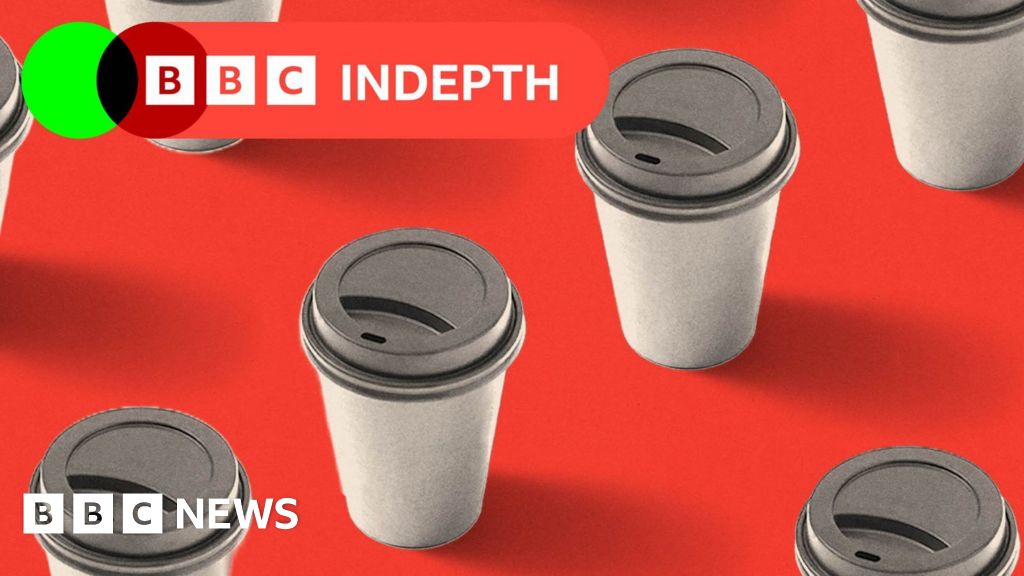
It's 9am at Kew Bridge in west London, and tourists, runners and dog walkers are queuing up at the Dear Coco vintage Italian coffee cart.
It is high-grade coffee made from the arabica bean, brewed in an expensive La Marzocco machine - and the price shows that, at £4.50 for an iced latte, £4.10 for a 10 oz latte, and £3.90 for a 6 oz flat white.
It's a price tag that would have once looked strikingly high, but across much of the UK the £4 threshold is well broken, including in chains that do not use the highest-grade beans. A large coffee in central London, served with an alternative milk like soy or almond, is now closer to the £5 mark.
Earlier this month in the US, Starbucks CEO Brian Niccol came under fire for suggesting a "$9 [£6.68] experience" at one of his outlets was a "really affordable premium experience".
The man working at the cart in Kew doesn't agree. He is relatively lucky; carts pay street trading fees rather than soaring rents and business rates. But still, he is squeezed. "We feel super strongly about keeping the price of a flat white under £4 for as long as possible," Anthony Duckworth tells me, as rowing boats glide past. "But it's becoming increasingly difficult, because every part of the supply chain has become more expensive. We think there's a really important psychological threshold around that four pound mark."
Coffee is not just a morning ritual, repeated worldwide: in fact, it's an insight into the modern global economy. The latte sheds light on everything from commodity inflation to trade chaos; from geopolitical strife and climate change to Gen Z cultural tastes. It teaches us about rampant new demand from the Chinese middle class, and the long-hanging economic effects of the Vietnam War.
The modern coffee journey started in Turin, northern Italy, at a train station in 1895. Steam-powered coffee machines were developed to cater to time-poor travellers, often on the Milan express - one theory for the name "espresso". It was the start of mass consumption of what had originally been a luxury drink.
Near the Turin ring road, at a glass and steel structure, I speak to Giuseppe Lavazza, whose great-grandfather launched the Lavazza coffee brand 131 years ago. "The secret of surviving is having a company ready to modify," he tells me while holding what he hopes is his next great innovation: a cookie of coffee, called a tabli, that he hopes will serve the growing at-home coffee market, without the need for environmentally questionable metal pods.