The ancient trick making food waste useful and tasty
Vayu Hill-Maini's lab has created a new cheese, or at least something that tastes like cheese, but is actually made from food waste. The bioengineer, who runs a lab at Stanford University in California, is experimenting with fermentation using fungi. "One of the most amazing th
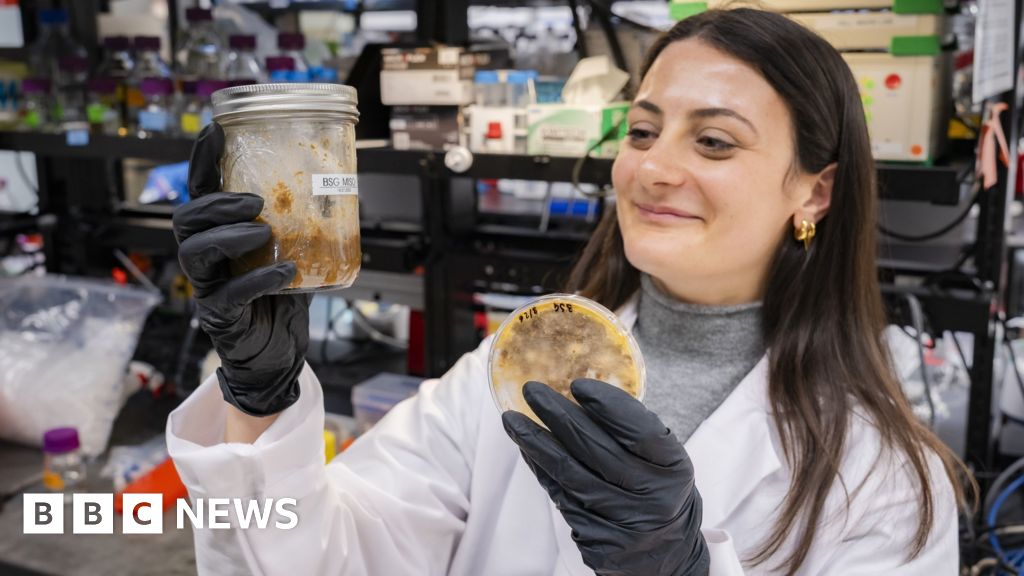
Vayu Hill-Maini's lab has created a new cheese, or at least something that tastes like cheese, but is actually made from food waste.
The bioengineer, who runs a lab at Stanford University in California, is experimenting with fermentation using fungi.
"One of the most amazing things that we found recently is that we could take waste and add a few other ingredients in a fungal fermentation and create this delicious cheese that is like a Pecorino or Parmigiano," he says.
Fermentation is a biological process whereby organisms convert carbohydrates like starch or sugar into substances like alcohol, without using oxygen.
Perhaps the best-known examples of fermentation are in baking and brewing, where yeast breaks down sugar into ethanol and carbon dioxide.
But it's not just wheat flour, or barley that can fuel fermentation, all sorts of substances are suitable - in biology those fermentation hosts are known as substrates.
With the latest biotech tools, companies are taking by-products of the food industry, that are currently discarded or have little value, and using fermentation to turn them into something useful.
UK-based Fermtech is transforming cocoa shells, which are normally thrown away, into a cocoa powder substitute, using fermentation.