The NTSB tries to keep cockpit audio recordings private. AI is making that harder
The NTSB is struggling to keep cockpit audio recordings private due to advancements in AI, which enable individuals to reconstruct audio from spectrograms inadvertently released during the investigation of UPS flight 2976's crash. This challenge highlights the tension between technology and regulatory oversight as unauthorized reconstructions of sensitive recordings circulate online.
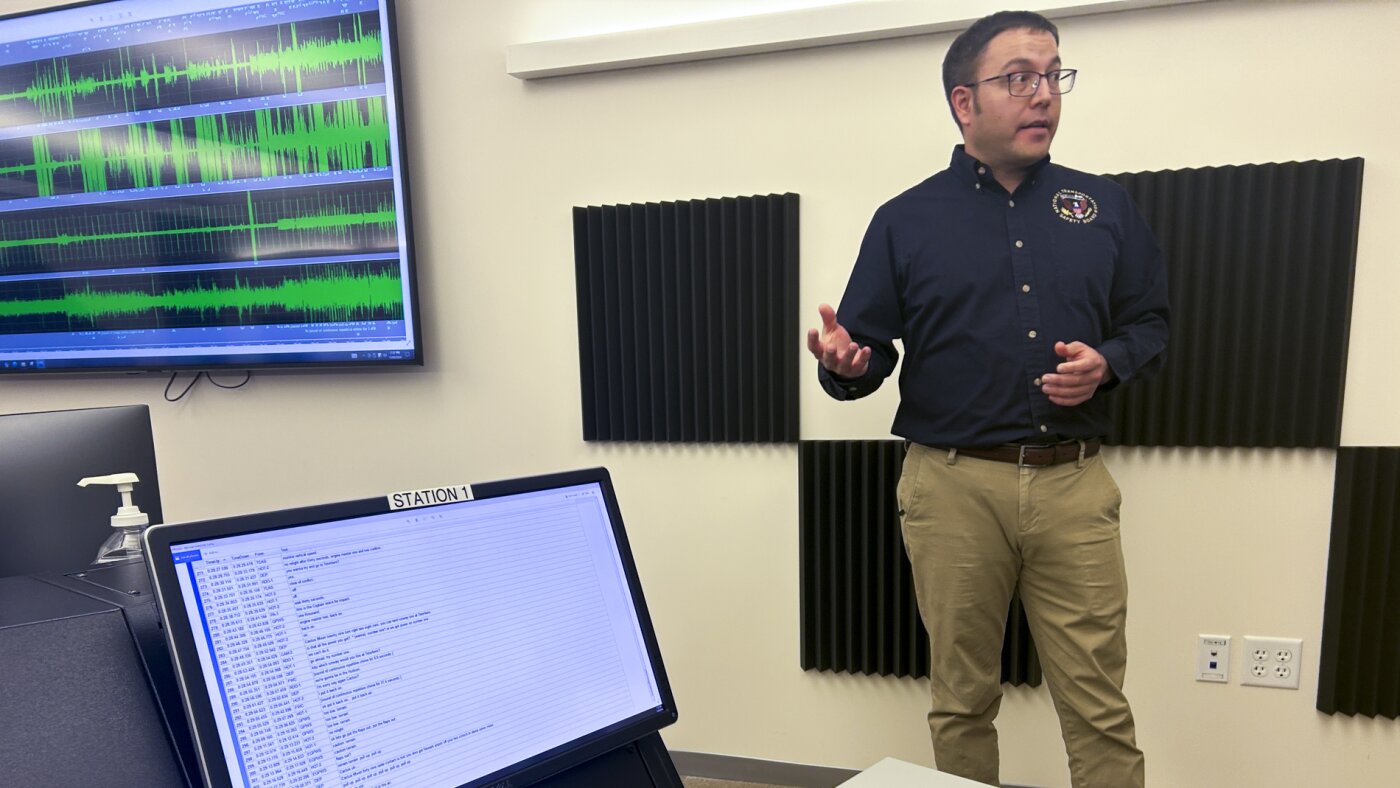
The National Transportation Safety Board (NTSB) recently faced a significant challenge regarding the privacy of cockpit audio recordings amid advancements in artificial intelligence. This issue emerged following an investigation into an unusual sound detected during the cockpit voice recording of UPS flight 2976, which tragically crashed shortly after takeoff in Louisville, Kentucky, last year, resulting in the loss of all three pilots and 12 others on board. In an attempt to understand this mysterious noise, the NTSB inadvertently made public certain spectrograms—visual representations of audio frequencies—that could potentially allow individuals to reconstruct the audio recordings themselves.
The agency's predicament highlights the growing intersection of technology and regulatory oversight. Recent developments in AI have made it increasingly feasible for individuals to derive audio from spectrogram images, raising concerns for the NTSB, which is legally prohibited from releasing such recordings. Scott Manley, an engineer and content creator, noted that the NTSB's efforts to analyze the ambient sounds captured in the cockpit recording inadvertently provided a pathway for reconstruction. After posting his observations on social media, Manley's comments sparked interest among tech-savvy individuals, prompting them to explore the possibility of recreating the audio.
One such individual, John McElhone, a small business owner with experience in AI tools, managed to successfully reconstruct the audio from the spectrograms in a matter of minutes. He emphasized that while the process could theoretically be replicated through traditional coding methods, the efficiency of AI tools significantly expedited the task. Although McElhone chose not to publish his findings, others in the online community did share their own audio reconstructions, further complicating the NTSB's efforts to maintain confidentiality around sensitive cockpit recordings.
The situation underscores an ongoing dilemma for regulatory bodies like the NTSB as they navigate the rapidly evolving landscape of technology and its implications for privacy and safety. As AI continues to advance, the ability to access and reconstruct private audio recordings raises critical questions about the balance between transparency in investigations and the need to protect sensitive information. The NTSB's recent actions to temporarily remove public documents from its website reflect the agency's acknowledgment of these challenges while attempting to uphold its mandate of ensuring aviation safety.




