Tuchel's defensive gambles and what do they say about Alexander-Arnold?
Tino Livramento's departure from England's World Cup squad has exposed the gambles and potential weaknesses in head coach Thomas Tuchel's defensive selection. Livramento sustained a calf injury in t…
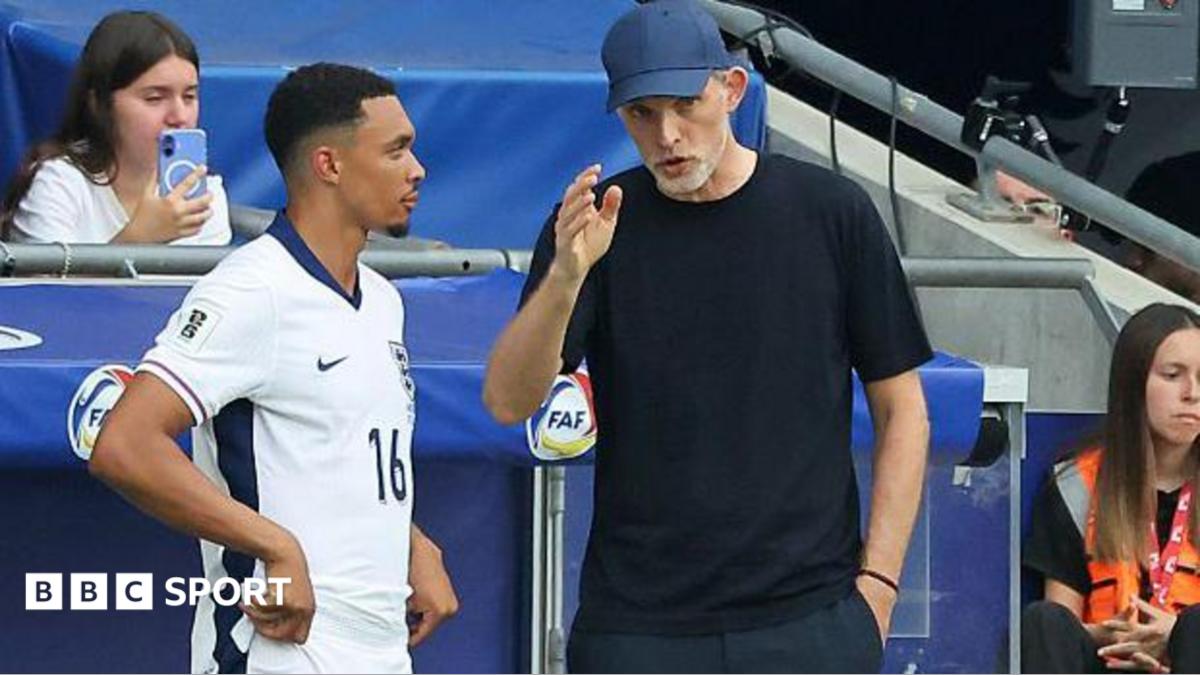
BBC Sport — 16 June 2026
Text:
16
0
0
Tino Livramento's departure from England's World Cup squad has exposed the gambles and potential weaknesses in head coach Thomas Tuchel's defensive se
Read Full Story at BBC Sport →
⚡ Quickyla Analysis
Original editorial context — not sourced from the article above
The unexpected withdrawal of Tino Livramento from England’s World Cup squad due to injury has inadvertently spotlighted the defensive fragilities woven into Thomas Tuchel’s tactical approach—particularly the vulnerabilities at full-back, where overlapping play often comes at the cost of positional discipline. Livramento’s absence amplifies a longstanding concern: Tuchel’s reliance on energetic, attack-minded full-backs may leave England exposed in transition, especially against teams capable of exploiting the high defensive line. This is not merely about one player’s fitness; it reflects a broader tension between Tuchel’s preferred high-pressing, possession-based system and the structural risks it entails when key personnel falter.
Such gambles are not new under Tuchel. His tenure at Chelsea and Bayern Munich has frequently hinged on full-backs like Reece James and Joshua Kimmich, whose offensive contributions are matched by their defensive lapses under pressure. The question now is whether England’s World Cup campaign will suffer the same fate. Livramento’s injury forces a reconsideration of the left-back role, where his dynamism and crossing ability were expected to complement England’s attacking midfield. Without him, Tuchel may be compelled to deploy a more conservative option, reshaping the team’s balance—and possibly its identity—in the process.
What remains unclear is how England’s midfield will adapt. If Tuchel sacrifices width for stability, the burden on central defenders like Harry Maguire and John Stones will increase, testing their ability to cover ground against quicker opponents. Meanwhile, the spotlight will inevitably fall on Trent Alexander-Arnold, whose role in attack often mirrors Livramento’s but with a different strategic weight. Tuchel’s reluctance to field Alexander-Arnold in a traditional full-back role has been a recurring debate; his inclusion would further expose England’s defensive structure, yet his absence could blunt their creative potency.
As the tournament approaches, Tuchel’s defensive gambles may yet prove decisive—or catastrophic. The balance between ambition and vulnerability has defined his career, and England’s World Cup fortunes could hinge on whether this risk pays off or unravels under pressure.
Sources
⚽ Sports
Don’t underestimate young athletes — the NAACP boycott plan could actually work

⚽ Sports
The football fans who went to a World Cup and loved it so much, they stayed
⚽ Sports
Barcelona Is Reportedly Pushing For Roony Bardghji’s Summer Exit

⚽ Sports
Arkansas baseball can't overcome pitching, defensive flaws as 2026 season ends

⚽ Sports
Champions League final: PSG's players and fans 'kept on believing'

⚽ Sports
Egypt to hold open training session for 'limited' number of fans in Spokane ahead of World Cup

