Watch sharks use manta rays to scratch unreachable itches
Watch sharks use manta rays to scratch unreachable itches Galapagos sharks have been spotted scrubbing off parasites with help from manta rays By Clarissa Brincat edited by Sarah Lewin Frasier We all know how maddening an unreachable itch can be. Galapagos sharks have found a
Galapagos sharks have been spotted scrubbing off parasites with help from manta rays
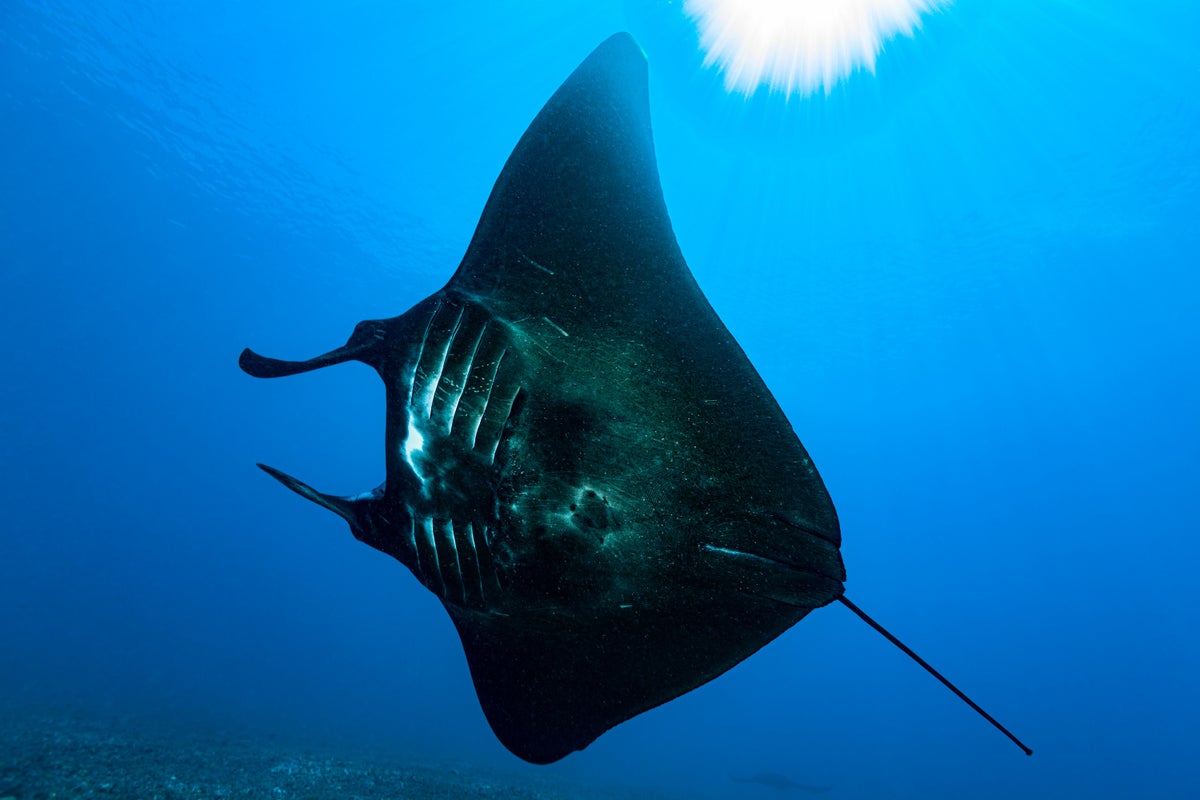
We all know how maddening an unreachable itch can be. Galapagos sharks have found a creative solution to this problem: manta rays, apparently, make excellent snout scratchers.At three different dive sites off Mexico’s Revillagigedo archipelago between December 2024 and January 2026, scientists spotted Galapagos sharks rubbing their bodies against the top and bottom surfaces of manta rays.
The mantas —gentle ocean giants who have no means of defense except their size—seemed to tolerate this behavior from juvenile sharks, only shuffling mildly in response. With adult sharks, however, they went into flight mode, rolling backward and trying to escape a potential bite. But researchers are confident that the scraping behavior isn’t hostile. The sharks specifically rubbed their snout and gill regions, known hotspots for sea lice, which suggests the mantas were being used as giant scratching posts.
If you're enjoying this article, consider supporting our award-winning journalism by subscribing . By purchasing a subscription you are helping to ensure the future of impactful stories about the discoveries and ideas shaping our world today.
A total of eight such shark-manta encounters have been documented by two separate groups of researchers, who published their observations in Marine Biodiversity and Environmental Biology of Fishes .
“The sharks know that the surface of the manta is like sandpaper, so it’s a good surface to remove those parasites,” says Mauricio Hoyos, a co-author of the latter study and director of the marine conservation nonprofit Pelagios Kakunjá.Previously, Galapagos sharks were spotted scratching their snouts and gills on whale sharks. Shark skin, like that of manta rays, is made up of dermal denticles , which are shaped like teeth, sharp and rough. “That’s why they’re nice places to scratch,” explains marine ecologist Jane Vinesky, lead author of the same study and a Ph.D. student at Pelagios Kakunjá.
Typically, when sharks have a parasite problem, they pop into a cleaning station—nature’s own spa, where small “cleaner fish” peck parasites off their clients. But sometimes these cleaning stations get crowded. This competition might be driving some sharks toward alternative strategies, Hoyos says.Gregory Skomal, a marine biologist who heads the Massachusetts Shark Research Program and was not involved in either study, has seen smaller fish use sharks as exfoliators to scrape off parasites. He finds the newly observed shark-manta interaction “unique and exciting.”
Scientists aren’t sure how sharks learned to do this—Hoyos wonders whether they’d gotten the idea when smaller fish scratched their own itches on the sharks, while Skomal suspects individuals simply tried it one day, found out it worked and kept doing it. “In the world of sharks,” Skomal says, “a lot of what they do involves trial and error.”







