'We had to get out of the way': The backlash over delivery robots
The first time Chicago resident John Roberts saw a delivery robot trundling down the sidewalk on his street he was impressed. "I actually thought they were kind of neat – it felt futuristic," he says. But his attitude started to change when, soon after, he was out for a walk wi
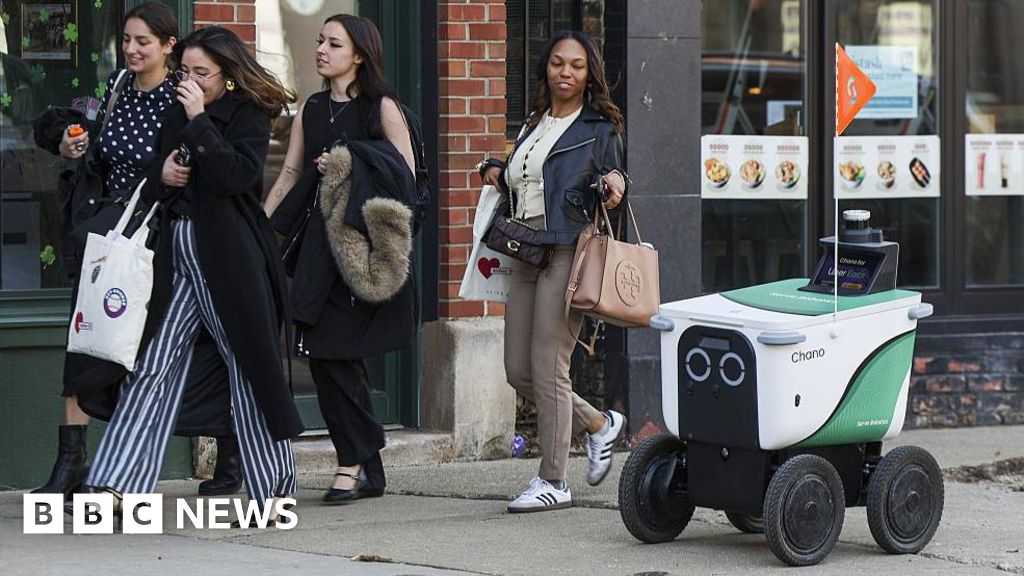
The first time Chicago resident John Roberts saw a delivery robot trundling down the sidewalk on his street he was impressed.
"I actually thought they were kind of neat – it felt futuristic," he says.
But his attitude started to change when, soon after, he was out for a walk with his family. As another robot approached, they found themselves having to dodge it.
"To us it felt a little off - the fact that we were on the one strip reserved for walking, and we were having to get out of the way," says Roberts. "I started thinking about what it would be like for us to go for a walk as a family if there were dozens of robots with lights and cameras zipping around."
The robots, more formally known as autonomous urban delivery vehicles, have started to appear on pavements in a number of cities across the US, plus in the UK, Japan, South Korea and Germany, transporting groceries and fast food, using cameras, sensors and GPS to navigate.
According to the companies operating them, they can reliably identify and avoid objects in the path, cross streets safely and react to their environment. The robots provide a useful service and help cut down on traffic and emissions, they claim.
However, some local authorities in the US and Canada, and members of the public, are less than enthusiastic. Bans have been put in place, and protests have been launched.
San Francisco has limited the access of the vehicles to less busy parts of the city, and Toronto has since 2021 prohibited the robots from using sidewalks.