What Hungary must do to receive EU funds frozen under Orban
Hungary must meet 27 binding conditions by August 31 to unlock €16.4 billion in frozen EU funds, including anti-corruption and academic freedom reforms. Failure to comply with any condition risks losing the funds permanently, as compliance will be strictly monitored.
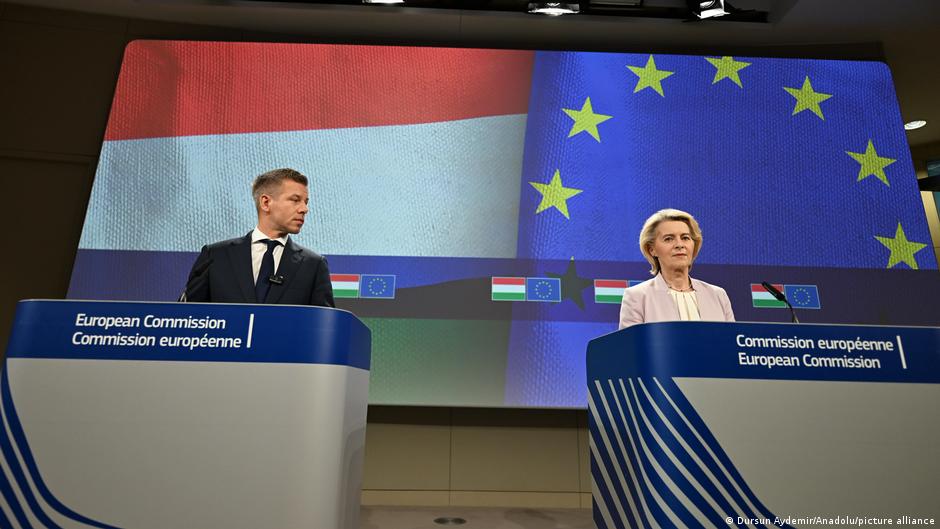
Hungary has taken a critical step toward unlocking €16.4 billion in frozen EU funds after striking a deal with the European Commission, but must now meet stringent conditions by August 31 or risk losing the money permanently. The agreement, brokered by Prime Minister Peter Magyar’s government, hinges on fulfilling 27 binding “super milestones” that include structural reforms, anti-corruption measures, and safeguards for academic freedom. While the deal outlines the path forward, it does not guarantee disbursement, as EU officials emphasized that compliance will be strictly monitored. Failure to meet even one condition could result in the withholding of all funds, including €12.9 billion in non-refundable grants and €3.5 billion in loans, with €10 billion of pandemic recovery funds set to expire after the deadline.
The challenges ahead are significant, particularly given the tight timeline and Hungary’s two-thirds parliamentary majority, which, despite its strength, may struggle to implement reforms swiftly. Legal expert Julia Pocze of the Centre for European Policy Studies noted that promises of public consultation and robust legislative debate could prove difficult to fulfill in the limited timeframe. The government has acknowledged the urgency, acknowledging that the negotiations required rescheduling after initial expectations of an earlier announcement. “The reason it took us longer was to be absolutely sure that we have a list of reforms and investments which can be met by August 31,” one EU official said. To ease the burden, some reforms—such as changes to Hungary’s pension and tax systems—were excluded from the requirements, deemed unfeasible under current economic conditions.
Among the most consequential pledges is the reform of Hungary’s university governance structures, which could unlock €2.2 billion in funding for academia, alongside plans to reform the national investment bank. The government has also signaled a proactive stance by announcing its intention to join the European Public Prosecutor’s Office (EPPO), a move aimed at reinforcing protections against corruption in EU funds. However, other contentious issues, such as Hungary’s past opposition to Ukraine’s EU accession talks, remain outside the scope of this agreement, according to EU officials. The focus remains squarely on meeting the agreed milestones, with the clock now ticking toward the August deadline. As one senior EU official noted, “We have agreed on the conditions that need to be met”—leaving little room for delay or deviation.